Ukraine keeps on rockin’ for a free world
After over three years of war and bombardment, Ukrainians are going to events again. Mirroring their frontline colleagues, the country’s event professionals are rising to extraordinary challenges.


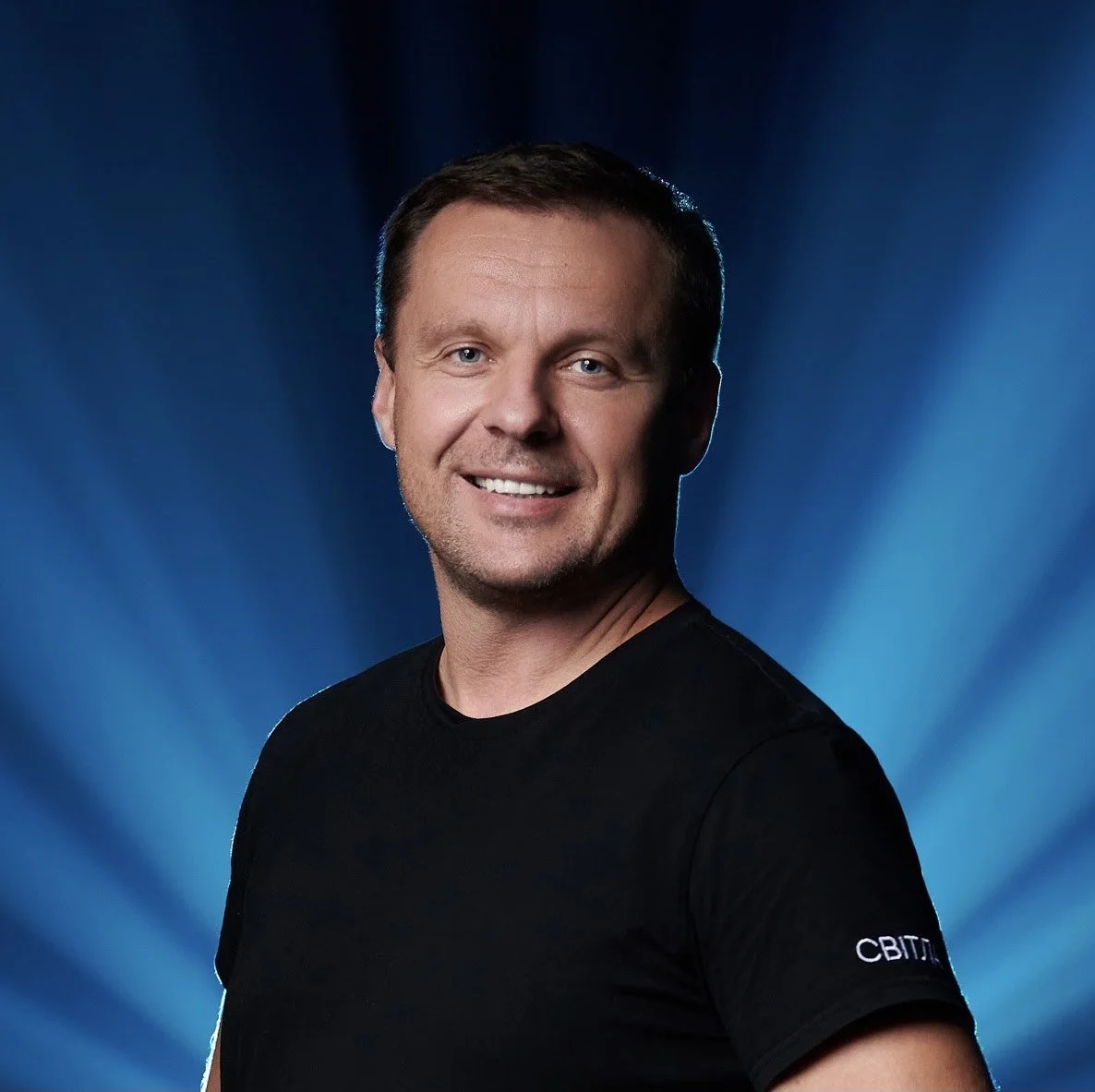
(Top row, L-R): Atlas Festival 2024, Kyiv (pic. Alight); Sound House’s warehouse in Dnipro, destroyed by Kalibr missles; Ukranian artist Monitik in concert (pic. Louise Stickland); Petro Balog Quartet at the Jam Factory, Lviv (pic. Bohdan Yemets); (Bottom row, L-R): Andrii Garkaviy, Sound House; Volodymyr Andrusyshyn, AlightTHE LIVE MUSIC and entertainment world is replete with explosive hyperbole – terms such as “smash hit”, “on fire”, “going ballistic”. But those of us who use these as throwaway terms would do well to reflect on their real meaning, especially when talking to event and live music professionals in Ukraine who experience destruction, injury and the threat of death on a daily basis.
Until February 2022, Ukraine was home to a thriving live events industry with regular shows by the world’s biggest pop and rock stars, as well as a full programme of home-grown cultural concerts and festivals. The sector was so strong that Ukrainians even elected a president from their entertainment industry, for goodness’ sake. But that thriving scene changed overnight when Russia launched its full-scale invasion of the country (not forgetting, as Ukrainians frequently remind you, the war proper started in 2014, when Russia occupied Crimea).
Andrii Garkaviy of Dnipro-based entertainment technology rental business Sound House was one of the first in the sector to feel the full brutal force of the assault. His company instals audio and lighting at a range of high-profile venues including the Olympic Stadium, Kyiv, (up to 80,000 capacity) and Arena Lviv (cap. 34,915), working with brands including Meyer Sound, Robe, Electro-Voice, and Dynacord.
In March 2022, as the Russians launched attacks throughout the country, Andrii was working out ways to mitigate the effects of full-scale war. “We tried to ensure the safety of our loved-ones and our business, for example, moving our families abroad and relocating West,” he says. “We received our last shipment of goods (including clients’ materials) from our central showroom into our warehouse in Dnipro, thinking it would be safer. That evening three Kalibr missiles targeted the warehouse. In one second, we lost everything.” The explosion also killed the warehouse complex’s security guard.
The impact was huge, he says, but not completely unexpected as he was mentally prepared for this possibility. “While it was a financial loss for our company, I started to think how to solve the problem with customers,” he explains.
The resilience that Ukrainian armies have demonstrated on the battlefield is echoed by those working in the civilian events sector. Remarkably, as its people suffer aerial bombardments night after night - not least the huge missile and drone attack directed at major cities late this May - Ukraine is starting to plan large-scale events again. The Atlas Festival in Kyiv was resurrected in July last year at 25,000 capacity, albeit scaled down from its 2021 peak of 600,000, when it hosted artistes including Okean Elzy, DJ Snake, Fatboy Slim and The Hardkiss. This year’s festival is scheduled for July again, with international and local headliners including Okean Elzy once more, Boombox, Artem Pivovarov and The Rasmus.
As Volodymyr Andrusyshyn, CEO of the lighting production and rental company Alight explains, “Atlas Weekend is certainly one of the largest music festivals in Ukraine, but it’s not the only major event.” As well its work on the main stage and elsewhere at Atlas, Alight’s projects include David Guetta, Beonix Festival (25,000) in Cyprus, Eurovision and other events.
“Many artists continue to hold solo concerts despite the difficult conditions,” he says. “For example, one of our recent productions was a solo show by Ukrainian singer Dorofeeva, which attracted over 10,000 attendees, followed by a second show by popular demand with nearly the same number. This proves that people in Ukraine have a strong need for cultural experiences to escape the harsh reality of war, even if only for a few hours.”
Evgeniy Gusarov CEO of Profi Ltd, one of Ukraine’s major production companies, has worked on a range of major events including Atlas, a high profile show by Kiss and the Kyiv Lights Festival. He details the sheer practical challenges involved in staging shows in Ukraine these days, including one which most Western organisers have never had to plan for: the possibility of an air raid during the event.
“Mostly, theatres are working,” he says, “but only to the capacity of their bomb shelters. A theatre may be 1,500 capacity but if its shelter is 500, that is its maximum audience. The same is true of Atlas.” He explains that the festival can be staged at Kyiv’s Blockbuster Mall again this year because it has an underground car park capable of sheltering the 25,000-strong audience in the event of an air raid. “It is a real solution for future festivals,” he says.
He points out that the challenges presented by the war are compacted by an earlier crisis which is now receding for us in the West. “You must understand that not only have we had a heavy war but COVID as well. The West has had time to recover from that but in Ukraine we have had an incredible problem. Before 2020 we had a full team of 150 people. With COVID, that fell to 50 people and now the team is about 10 strong.
“Additionally, events are changing their format. Beforehand we had big projects at the Olympic Stadium with 80,000 people and all the concert production that goes with it. Now we have small concerts and conferences in small halls. Events can only happen in special environments. Not only do they need a shelter but good egress routes as [a potential attack] is so unpredictable. The government organises many events and if they say ‘We need it in three days’, we have to find a place with this environment. If it’s not possible, we may have to move it to another city, which makes logistics difficult.”
Perhaps Evgeniy’s most significant challenge, as he’s alluded to, is lack of personnel. Here he demonstrates typical resilience and forward-thinking. “Shortage of people and technical knowledge is one of the biggest problems. Faced with this, we have opened an education project in Ukraine. Previously I was educated at the Live Academy in [Wakefield] England, and I decided to build something like that in Ukraine; Backstage Space. I’m trying to find international partners for students in Ukraine. Before the war there were a huge number of big events, and our teams improved their knowledge with every project but now they have lost the impetus and training.”
Of course, significant numbers of actual and potential team members joined the armed forces to fight, and, says Evgeniy, “It’s impossible to know what will happen after the war. Will the guys now serving in the army want to come back to ordinary life? It’s impossible to predict.” He describes how demographics in wartime will impact the future of working life after the war, pointing out that experienced event professionals pre-war would have been middle-aged while natural recruits to the industry at that time, who might have joined in their mid-teens, would now be in their late 20s. “It will have a huge influence on the concert and sound business and society generally.”
Throughout the interview, I have been attempting to pitch my questions to portray a picture of the plucky Ukrainian events sector battling adversity to lay the foundations of a post-war recovery. And, while this is true on one level, it’s too early to tell that story yet, as Evgeniy reveals the overwhelming sadness and exhaustion that he and his team are experiencing.
“Seven days before the war I was working on a Coldplay concert,” he says. “It was so emotional. Now I watch the video of that concert and see myself and my friends experiencing a feeling called happiness, doing our lovely job and working for the audience and the artist. Now, I don’t understand that emotion – we’ve lost that feeling forever.
“Now, we all have different feelings throughout the day. Everything may be good when we wake up but then, after an attack, we’ll be trying to find out who is alive and what just happened: our mood changes and we struggle inside every day. We hope for the best but we’re not optimistic [that the war will end soon].”
But, he adds, “This year Profil celebrated its 20th anniversary, so I’ve been doing this half my life, which is something to be optimistic about. I have built strength for moving forward.”
The phoenix-like re-emergence of live events in Ukraine, as well as providing a much-needed morale boost and escape for audiences, is directly contributing the war effort. As Volodymyr Andrusyshyn points out: “Almost every artist now donates a significant portion of their concert proceeds to support the military, so by attending concerts, audiences are also directly supporting our defenders.”
Thanks to Louise Stickland for her help in co-ordinating interviews for this feature.
